Tagliatelle Errata
Important Pasta Corrections!

This week on the Pastabbatical I was planning to write about Bologna’s towers - two Medieval towers, one very tall, the other very unstable looking, define the skyline of the city today. But in the Middle Ages there were dozens of these towers, giving Bologna the most dynamic skyline in the world. Fascinating, right? Maybe TOO interesting, because I’m still not done yet. Tune in next week!
Instead this week I have BREAKING NEWS, and AN IMPORTANT CORRECTION regarding Tagliatelle Bolognese, the most famous member of the Bolognese Pasta Pantheon: you may recall that while describing tagliatelle al ragu bolognese I said that, in contrast to tortellini, no mysterious brotherhood of experts dictated the proper way to make it. To my great shame, and also great delight, I have learned this is WRONG!
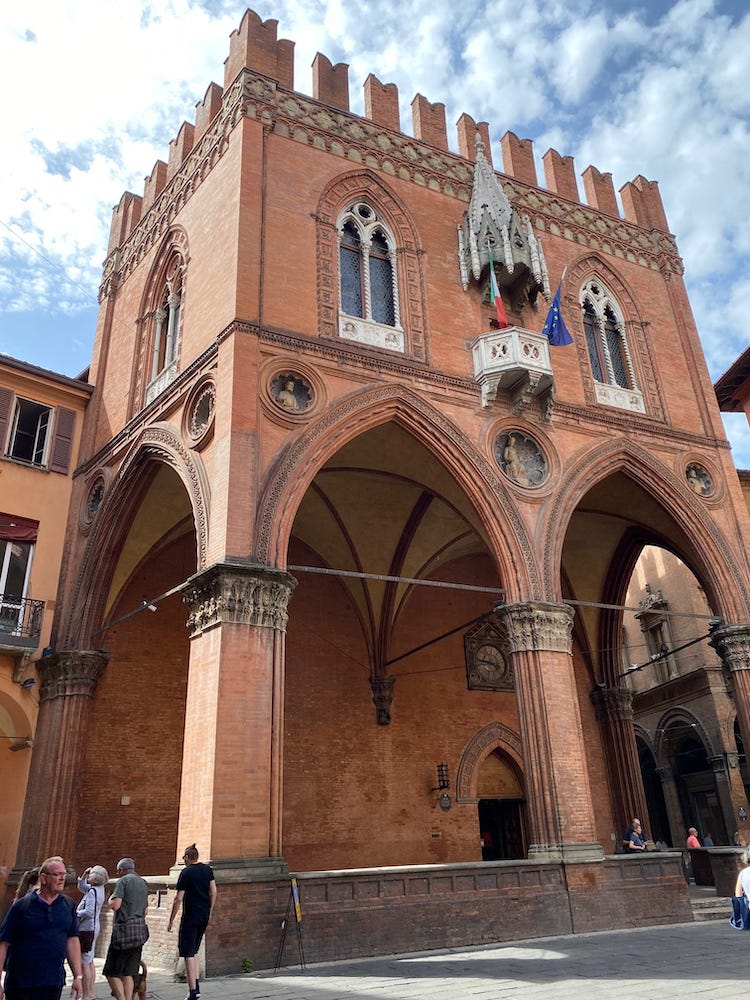
This beautiful Gothic specimen pictured above is the Palazzo della Mercanzia, Palace of the Merchants. It was built in the late 1300s by the city’s guilds, and is now home to Bologna’s Chamber of Commerce. But more importantly, since 1972 it has also been home to the Golden Tagliatella: a noodle made of solid gold, the template against which all other tagliatelle are judged. This long, skinny rectangle sits in an elegant wooden box, befitting the “solemn commitment that the gold standard will be jealously preserved by the Chamber of Commerce as a solemn testimony and protection of the glorious traditions of Bolognese cuisine.” Apparently I owe the Chamber of Commerce an apology: there are standards for tagliatelle (gold ones!), just as there are for tortellini. So what specifications are they so solemnly guarding?
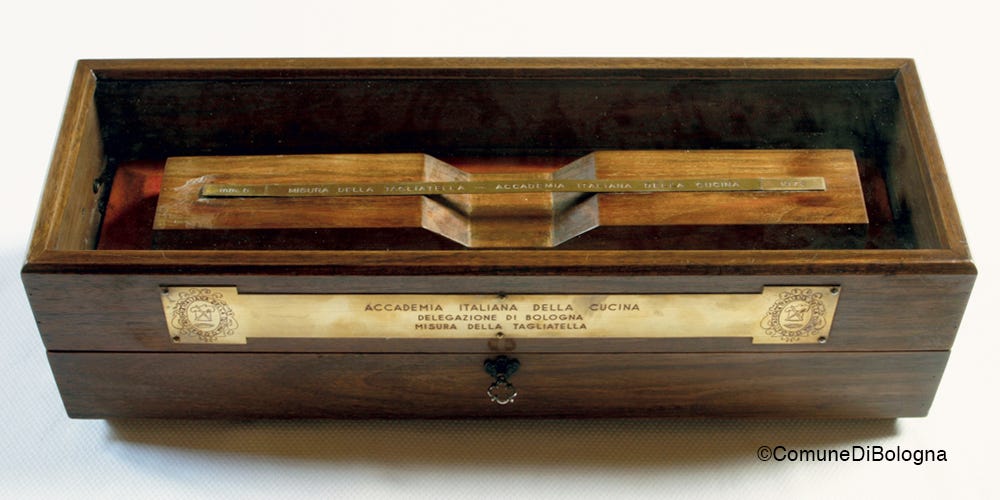
The width of a tagliatelle should be exactly one 12,270th the height of the Torre Asinelli, tallest of Bologna’s towers. For those without a Medieval tower at home, that equals 8mm cooked, or 6 1/2 to 7mm uncooked.
Also solemnly guarded in the Palazzo della Mercanzia is the official notarized recipe for ragu bolognese, which I’ve linked below:
Official Ragu Bolognese Recipe (in Italian, via the website of Gli Apostoli della Tagliatella)
That said, the same article that gave us the “solemn commitment” quote I used earlier also included an interview with Alessandro Gozzi of Trattoria Bertozzi, one of Bologna’s most respected restaurants: “Diverging from certain standards is forgiven a little more... The geometry of the tagliatella is forgiving. With the tortellino, especially with the zealots and the historians, there’s no compromise. [And with ragù] it’s the same as the [tagliatelle] measures. Ragù is a personal thing.”
There you have it! Tagliatelle: there are rules, but they’re made to be broken (within reason.) Now how about some more pasta lore?
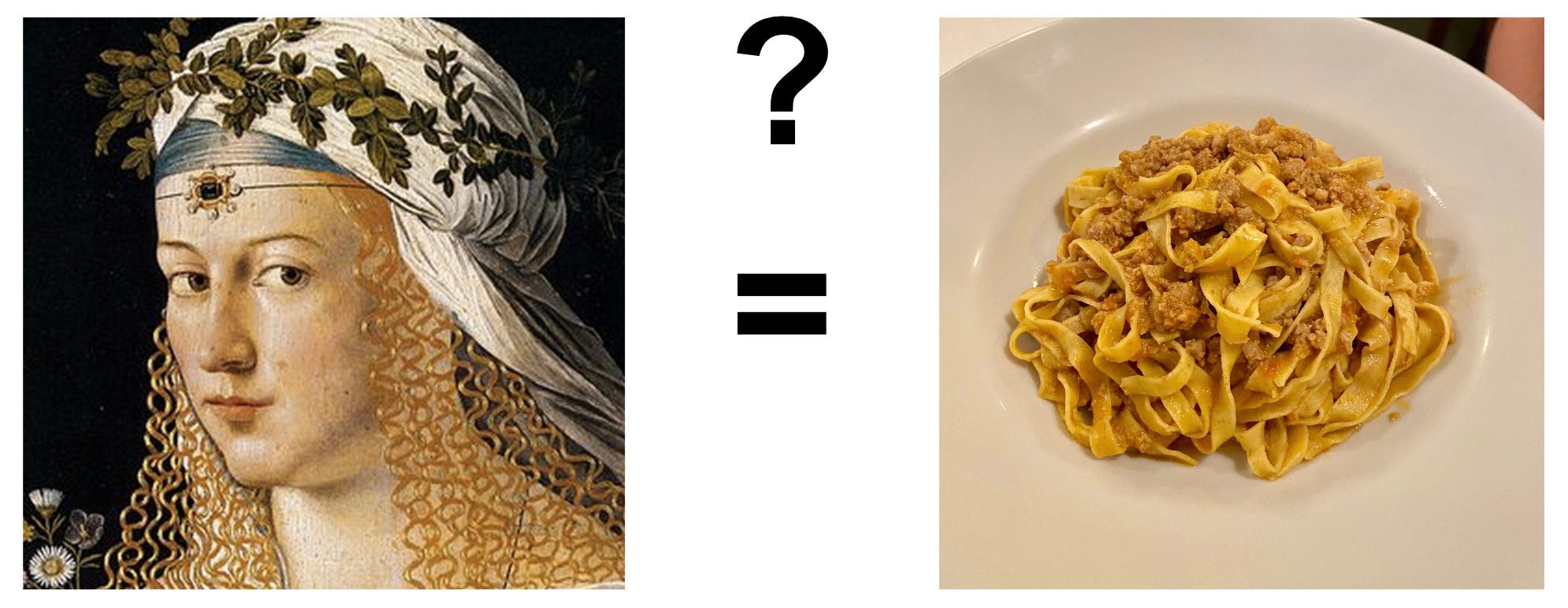
Tagliatelle, according to legend, was inspired the golden flowing locks of Lucrezia Borgia when she passed through Bologna on her way to marry the Duke of Este in Ferrara. Is this true? No! It’s from a story by the Italian humorist Augosto Majani. But it has spread far and wide, so go ahead, tell your friends.
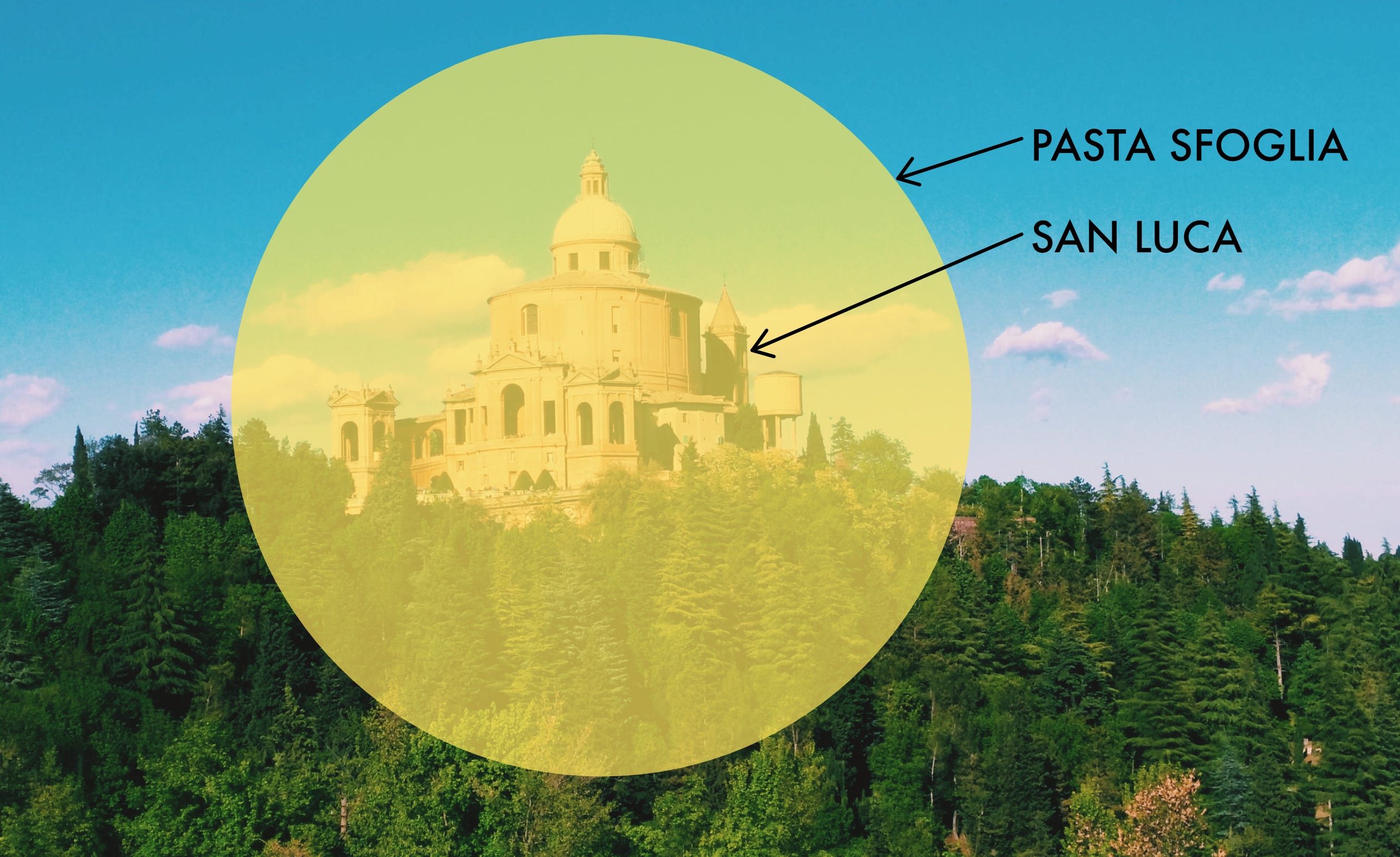
Tagliatelle, like all fresh pasta in Emilia-Romagna, is made by hand-rolling your dough in a sfoglia or pasta sheet; according to legend, you know the dough is thin enough for tagliatelle when you can drape it over your rolling pin, hold it up to the sky, and see San Luca through it - that is, the silhouette of the Santuario di San Luca on the hills above Bologna.
That concludes the tagliatelle corrections for this week - stay tuned next week, to hear more about that tower that just happens to be 12,270 times taller than a tagliatelle is wide.
WHAT I SAW THIS WEEK:
The countryside outside of Bologna, courtesy of ExtraBo:
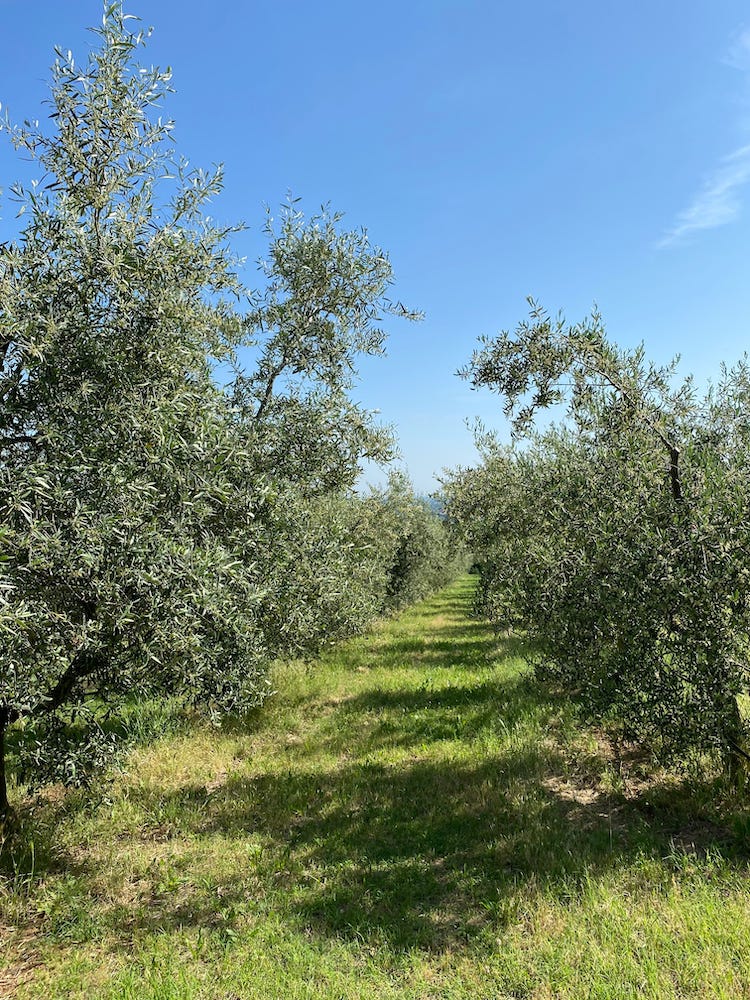
Bologna is at the base of a mountain range, and the green rolling hills around the city rival the beauty of its much more famous neighbor Tuscany. ExtraBo is a a fairly new project of BolognaWelcome, the city tourist office, to promote and give tours of the countryside, and we somehow lucked into going on one of their first ever in-person bus tours: just 7 kilometers from the city center, we were up on a hillside surrounded by olive trees doing a blind olive oil tasting at a farm called Bonazza; 20 minutes later we were at a small, still-under-construction winery called Tomisa. It was just the two of us, a very chatty older local lady, and our leader, an experienced outdoor trekking guide who lives in the mountains, had a wealth of knowledge about the Bologna and the surrounding area, and was very candid that they had NOT done a good job publicizing this tour. But the countryside that ExtraBo tries to publicize is absolutely beautiful: a large portion of the hills are a national park full of caves and calanchi rock formations in addition to olive groves and vineyards, and there’s even a relatively new 100 km hiking trail from Bologna to Florence called the Path of the Gods.
WHAT I ATE THIS WEEK:
Tortelloni with ricotta and fresh herbs at Ca’ Bianca Bio Azienda Agricola.
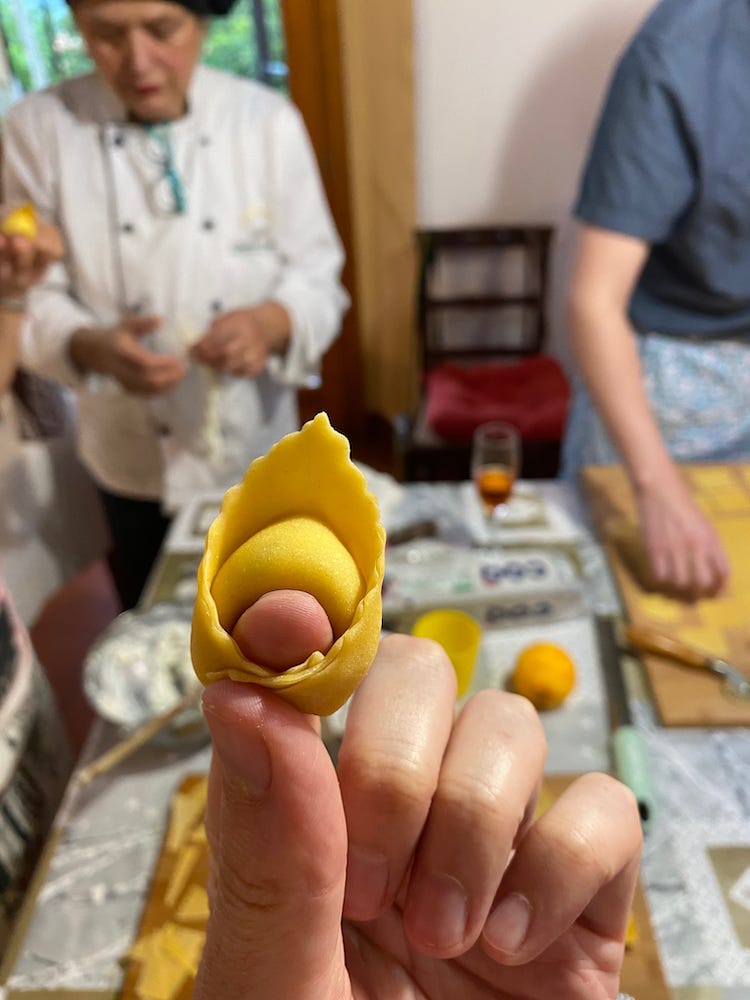
Ca’ Bianca is a cooking class, run by Flaminia and her mother Elisabetta at their family farm 20 minutes outside of Bologna. Both women are lawyers, but Elisabetta also went to Italy’s most prestigious culinary school, and her mother and grandmother once ran restaurants in their village. Now she teaches people to cook twice a week as a side job and a break from office work: she uses her family’s recipes, and teaches out of their 17th century stone farmhouse, surrounded by 7 dogs. The class was incredibly fun, and I would recommend it to anyone - we made pasta for dinner, pastries for dessert (and to take home), but this tortelloni filling was the revelation: the standard at most places in town is ricotta, parmesan and nutmeg, but at Ca’ Bianca she added a heaping handful of fresh mint, sage, marjoram, oregano, and thyme. Served with butter sage and parmesan, they were rich, luxurious and simultaneously refreshing. Can’t wait to make these at home.